Pixel Art is a form of digital art in which images are created and edited at the pixel level, using graphics editing software. What defines it is its unique visual style, where individual pixels serve as the building blocks that make up the image. The result is a style very similar to mosaic, cross-stitch, or pointillism.
🎮 Current titles using Pixel Art

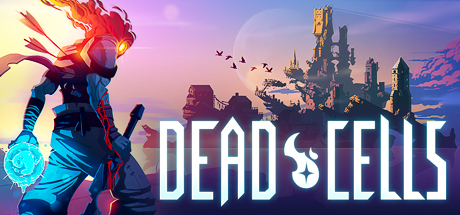



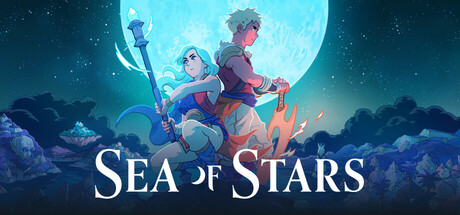
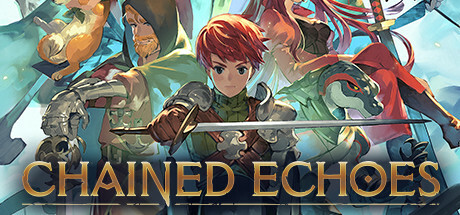
Pixel Art is not just nostalgia: it remains an artistic choice in some of the most acclaimed indie games of the last decade.
Pixel Art has existed since the first image editing software and the first 2D games with graphics appeared. The term was first published by Robert Flegal and Adele Goldberg of Xerox PARC in 1982, although the concept already existed 10 years earlier in the SuperPaint system, created by Richard Shoup in 1972.

Although at that time it was not yet considered an art form as such, Pixel Art was a way for developers to create images using limited graphics and computer resources. Graphics cards could not generate more than a few pixels, so programmers had to work with each pixel and ensure that the overall image made sense. It was painstaking and difficult work due to technical limitations.
With the advancement of technology, this technique became obsolete for many uses. However, thanks to nostalgia and the uniqueness of its visual style, Pixel Art has remained alive as an artistic genre in its own right. Many modern games still use Pixel Art as their main visual theme, no longer due to technical limitations, but as an aesthetic choice.
Although Pixel Art was never expected to go beyond its virtual representation, it soon began to appear in physical format. Artists began creating posters, magazine covers, music album covers, paintings, advertisements, and even pixelated tattoos.

The great references of Pixel Art
The artist group eBoy, also known as "the godfathers of pixels," is made up of Kai Vermehr, Steffen Sauerteig, and Svend Smital. It was founded in 1997 and they are famous for their complex illustrations called Pixoramas: scenes of pixelated cities and landscapes. Their three-dimensional isometric artwork can be found on posters, t-shirts, souvenirs, and galleries, as well as in campaigns for brands like Adidas, Honda, MTV, VH1, and Coca-Cola.
Because Pixel Art managed to leave the computer screen and become part of the real world, many forms of expression have emerged. Think of Invader (or Space Invader), whose urban interventions with tiles can be found in cities around the world.

Kelly Goeller took her art outdoors, creating installations where water flows in a pixelated way.

John O'Hearn uses small colored balls processed through a computer program and a machine he invented himself to place each element in its exact location.

Pixel Art is still alive
Without a doubt, this is a great list of artists who continue to expand Pixel Art in any format. For my part, I don't think I will ever escape digital illustration of these little squares, because it is here, together with animation, where I like to express myself.
Pixel Art is not just a nostalgic style, but a living art form that continues to evolve and find new spaces, both on screen and in the real world.